
( What This Means for Hunters & Anglers)

Written by Brittanie Benavidez-Hunt Horizon LLC
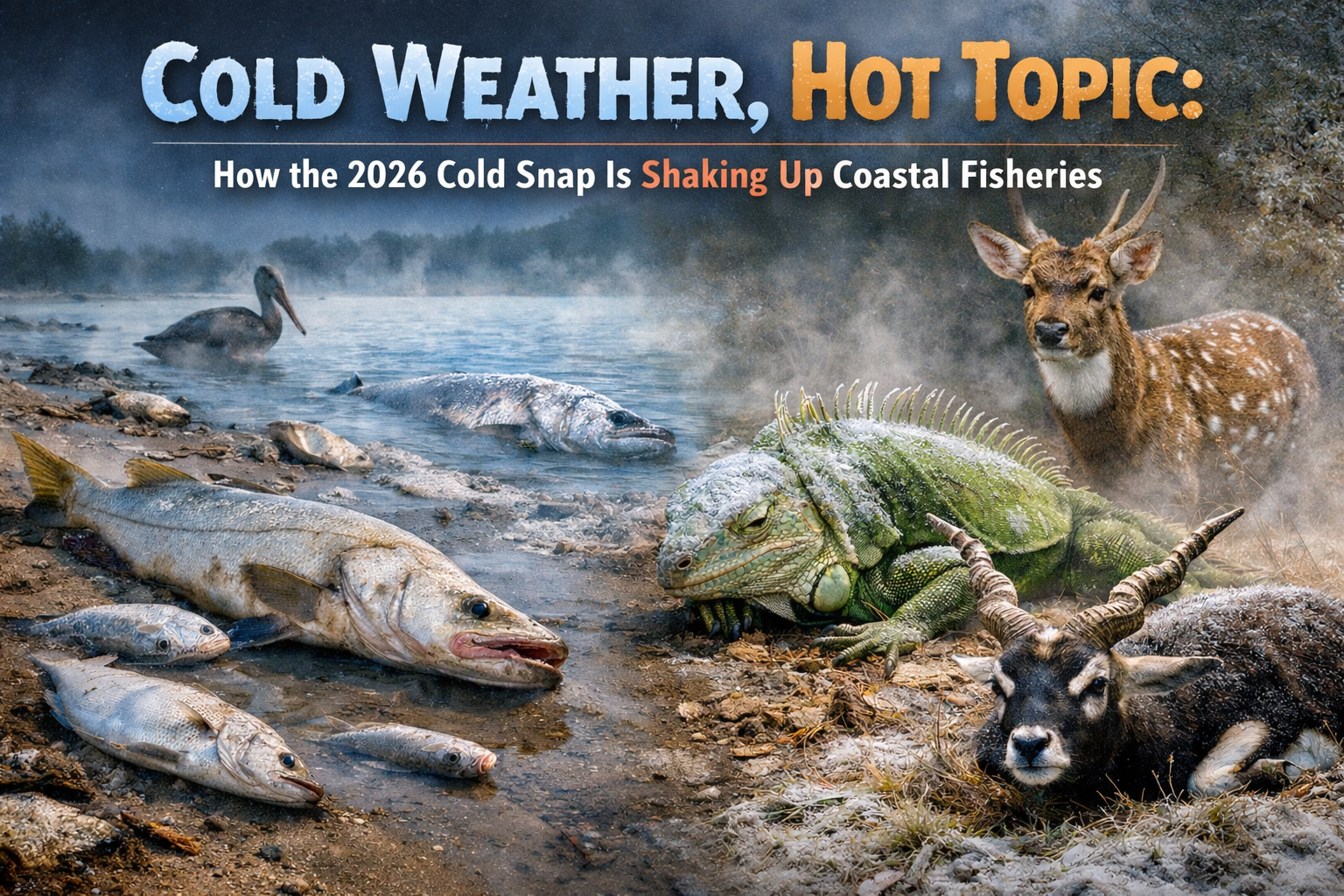
If you fish Florida long enough, you learn one truth fast: water temperature runs the show. This late-January into early-February 2026 arctic blast has made that truth undeniable. Stunned fish are washing up on beaches and are floating belly up in lakes and ponds. And that’s just what we see on the surface. Anglers and charter captains are watching the thermometer like it’s a stock ticker.
Reports have pointed to widespread stress and localized kills in multiple Florida counties. Snook and Tarpon are among the species showing up in the greatest reports. There are also losses in warm-water exotics like peacock bass.
Many YouTubers, such as Abenz Fishing, use their platform to inform viewers about the reality of this cold snap.
This isn’t just a Florida story either. Cold-driven fish and wildlife events are popping up across North America where the polar air plunges far into south. This is seen especially along shallow bays and estuaries where temperatures can drop fast and stay low.
Let’s break down what’s happening, why it matters, and what hunters and anglers can do to help fisheries and wildlife bounce back.
Why cold snaps hit coastal fisheries so hard
Coastal fisheries are most vulnerable during sudden cold events because:
- Shallow water cools quickly, especially in bays, canals, and backwaters.
- Many popular gamefish in the Southeast are warm-water “tropical” species living near their lower temperature limits already.
- Sudden cold water can cause physiological stress, slow movement and feeding, and in severe cases, cold-stun and mortality.
Florida’s own wildlife agency has warned that prolonged or severe cold can impact marine and estuarine fish, including Snook and Tarpon, and can also trigger freshwater impacts—especially among nonnative species. (FWC)
All this to say, it’s not just fish: reptiles such as sea turtles can become cold-stunned when water drops below ~50°F, becoming weak and unable to swim—often requiring rescue and rehab.
Florida right now: What hunters and anglers are seeing
1) Fish kills and stressed fish (especially in shallow zones)
Recent Florida reporting describes hundreds, if not thousands, of dead marine life washing ashore in most parts of Florida.
Fishing media and local outlets are also describing a growing number of public reports across many counties, with early indicators suggesting Snook and Tarpon are taking the hardest hit in southern counties.
2) Exotics getting hammered
Cold snaps don’t just “slow the bite”—they can reset entire pockets of nonnative populations. Florida has been openly discussing cold impacts on nonnative freshwater fish like tilapia and Mayan Cichlids. On the reptile side, this week’s cold created conditions where green iguanas became cold-stunned in some of the higher populations see. FWC issues an executive order regarding cold-stunned green iguanas.
What history tells us: Cold kills can echo for years (but recovery is real and attainable)
Florida has been here before—most famously during the January 2010 cold event. Research from Florida scientists found that Snooks resilience and recovery varied by estuary, and management actions like harvest closures were used to protect remaining breeders to speed recovery.
That matters now because it reminds us of two things:
- Not all areas will be hit equally (some estuaries recover faster than others).
- Smart management + angler behavior can shorten the loss after a big hit.
Florida isn’t alone
Cold-related fishery impacts also show up elsewhere along the Atlantic and Gulf during severe winters. One example: Texas documented massive coastal fish kills during the February 2021 freeze and responded with emergency trout regulations to aid recovery. (Texas Parks & Wildlife)
The hunting side: Cold weather impacts on animals (including exotics in Texas)
Severe cold can cause direct mortality, reduce body condition, and change movement patterns—especially for animals that aren’t adapted to sustained freeze temperatures.

Photo courtesy of @timkennedymma/Instagram.
Texas is a clear example because the state has large free-ranging exotic populations in its most popular hunting destinations.
During the February 2021 winter storm, Texas Parks & Wildlife asked the public to report impacts and noted “potential significant losses of axis and blackbuck“, that could lower free-ranging exotic numbers in the area.
Texas defines “exotic animals” broadly (axis deer, blackbuck, nilgai, etc.), this is important to note because many of these species are managed differently than native game, they are dependent on warm weather climate and specific care routines.
What this means for 2026 fishing in Florida: a practical forecast
No one can promise exact outcomes – but based on how cold events have affected warm-water fish and what earlier research has shown and proven, here’s MY projected Florida-focused outlook:
Late winter into early spring (Feb–Apr 2026)
- Slower action in the shallows, especially early mornings after clear, cold nights.
- Fish that survive will often stack in deeper canals, channels, springs, and warmer refuges.
- Expect more “feast or famine” days: short bite windows when sun warms flats.
- If your area saw heavy mortality, you may notice fewer large Snook or Tarpon showing up in your usual spots. I predict this will happen early into mid-season.
Spawn season and summer (May–Aug 2026)
- This cold front seems to be hitting adult spawners in certain estuaries but not all, so you could see:
- Weaker large species locally, with a rise in fewer juveniles later in the season.
- A patchier bite—great in some systems, utterly disappointing in others. Lower tide waters will have fewer populations than before, and groups will be localized in larger areas in deeper water. That means sight casting will be more challenging, but is still possible for many species.
- The “good news scenario” is that surviving fish often concentrate. They can still produce strong spawns if protected. This is one reason seasonal protections are commonly discussed after cold kills.
- Select your “keepers” wisely. If you don’t eat it, you don’t need it. Let the species have the best chance of reproducing to bounce back some of the loss.
Fall 2026 into next season
- Recovery can be fast in some places. It can take multiple years in others, especially for species with localized adult losses. Snook research shows estuary-by-estuary differences. You can also count on smaller groups of redfish until the next spawning season of 2027.
What to expect from outfitters and guides (fishing + hunting)
Fishing guides/charters
- Short-term: more cancellations from wind/cold, plus clients hearing “fish kill” headlines. Don’t let that steer you away. Cold, wind and “fish kill” is nothing new. Don’t let the media deter your success or your excursions. Guides know their niche and continue to build the client-outfitter relationship even in tough times.
- Operational shift: Guides my have to make a pivot.
- deeper-water patterns,
- species less affected by cold weather conditions in that region and be “picky”. This is not a bad thing. They understand the fishing habits. Trust their judgment.
- adjusting start times to warmer afternoons to up the chances of bites.
- If management or government actions tighten, guides may need to redesign trips. This includes considering area closures, species protections, and tighter regulations. They will be prioritizing what is most ethical and legal. That’s just the name of the game.
Hunting outfitters (especially in regions hit by prolonged cold)
- If game animals took losses or are stressed, outfitters may see:
- lower encounter rates in the short term
- more conservative harvest recommendations
- rescheduling to allow recovery on populations
- and increased emphasis on habitat and nutrition support for their operation.
Texas’ 2021 experience shows that major winter weather can be severe enough to drive state-level response and monitoring, which is the same playbook you may see (or already see) elsewhere when impacts are heavy. (Texas Parks & Wildlife)
What hunters and anglers can do right now to help populations rebound
Here’s the part that actually moves the needle—especially after a big stress event like we are experiencing.
1) Report fish kills and distressed wildlife: Fish Kill Hotline
- Florida (and many other states) encourages the public to report fish kills. They also seek information on abnormal fish behavior. This helps support assessment and relay response.
2) Practice “recovery-season” ethics
For the next 6–12 weeks, treat your local fishery like it’s in physical therapy: Working to correct, not solely to maintain.
- Keep only what you truly need, and consider voluntary catch-and-release even when harvest is legal.
- Avoid targeting obvious cold-stunned fish (they’re easy to catch for all the wrong reasons).
- Use best handling practices: Minimize air exposure, wet your hands, take quick photos, and be sure to revive before release.
3) Protect the nurseries
If you care about next year’s fishing, protect this year’s babies:
- Avoid running shallow seagrass flats. We don’t want to disrupt new growing populations.
- Support local habitat efforts (oyster reefs, seagrass restoration, shoreline projects). You can check your state fish and game websites for volunteer events and get active.
- Be mindful around warm-water refuges where fish and other species concentrate. Give them space.
4) Support smart, temporary management
Short-term sacrifice can protect breeding stock and speed recovery. For example, Texas used emergency trout regulations after the 2021 freeze. Florida used Snook harvest closures after 2010.
5) For hunters: be selective and conservation-minded
If you’re hunting areas that experienced winter stress:
- Consider passing on stressed animals, refraining from harvesting does/cows in poor condition, or hunting heavily pressured groups.
- Most importantly, work with ethical outfitters who prioritize herd health over a quick season.
Bottom line
This cold snap is a stress test—on fish, wildlife, and the businesses built around them. The best scenarios will come from anglers, hunters, agencies, and outfitter’s that all pull together to reach the same goal.
Bottomline: If you want to ensure a bright future for hunters and anglers, act now. Such devastating events require your participation and awareness.


Leave a Reply